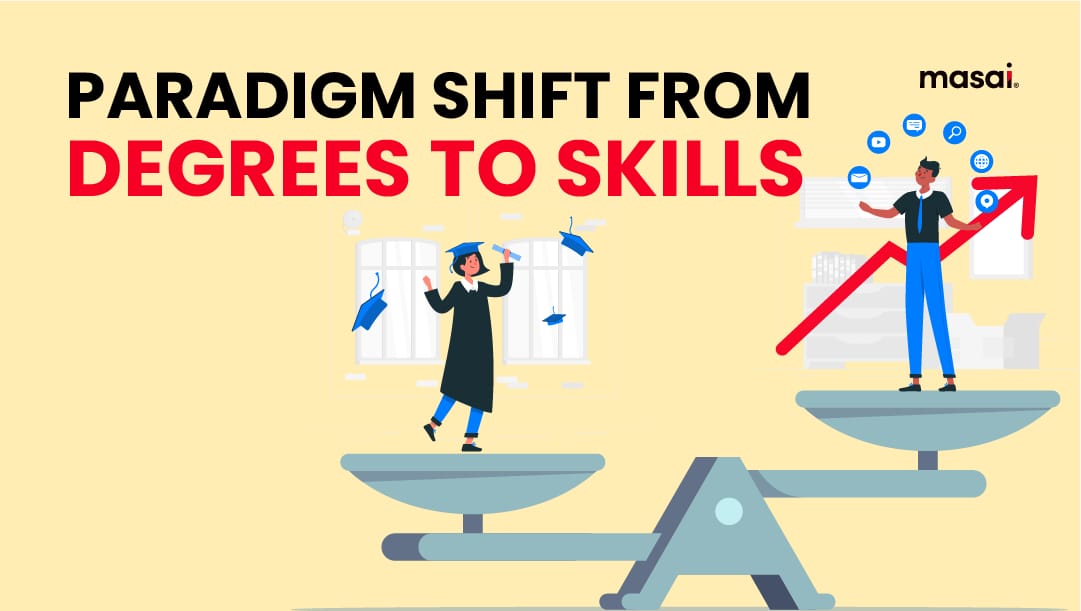
The internet is showing young people a lot of diversified stories about success: young people who create apps and become really rich, online personalities creating brands without having to go to college, freelancers traveling the world and working online. All this makes many people eager for other ways of succeeding that genuinely value skills, creativity, and freedom.
A variable is a name given to one or more values that a program uses during execution.
I. Sectors Dominated by Skill-Based Employment
There are several areas in employment today where your skills count much more than your education.
- Technology and IT
Among these areas of coding, website creation, video game development, website design, computer security, and data analysis, the important things are to show your skills, show previous work, and projects one has done. A lot of the well-established coders today are self-taught.
- Creative Industries
What’s most important in graphic design, video creation, animation, computer artwork, content writing for marketing, and photography is the creative capability and samples from past work. A degree isn’t nearly as important as samples of what you can do.
- Digital Marketing
Of course, more than going to college, knowing your way with the tools and knowing how things work online is key in making websites show up in searches, marketing on social media, planning content, and sending emails.
- Trades and Vocational Skills
People are again starting to appreciate electricians, plumbers, car mechanics, carpenters, and technicians. These are very important jobs that pay well and are open to people who get training at a trade school.
- Entrepreneurship and Self-Employment
It therefore requires very little money, and without having a college degree, it’s possible for young people to create companies, ranging from online stores to building a personal brand to giving advice.
- Gig and Remote Work Roles
Yet, it is only by the past work and proven skills that allow all these people to do well, from virtual assistants to customer service people, teachers, freelancers, and so on.
–
II.Impact on Education and Society
This is the change that influences how society thinks, what schools focus on, and the manner in which the economy functions.
- Reconceptualising Educational Institution
These colleges increasingly ensure that skills-oriented and hands-on classes-in collaboration with businesses-are included, plus opportunities for learning in real situations. Currently, many of the institutions include coding classes, digital skills training, and business start-up programs.
- Pressure to Update Curricula
Outdated classes reduce the potential of the students to get a job. Hence, schools and colleges started feeling the need to update their classes in terms of teaching the requirements that employers need.
- Increased Social Mobility
Skilled jobs allow each person, regardless of their background-even from poor families-to earn a good income without necessarily having to invest much in a qualification.
- New Forms of Inequality
While jobs that look at what one can do can be good, they can also make gaps between people bigger. Without Web access or knowledge about new fields, others might not get ahead. It is really important for all to have access to computers and get training.
- Shifting Family Expectations
The parents are slowly ceasing the push for normal jobs and are rather supportive of different job choices. However, in many places, degrees are still key; hence, the change is very slow and might have conflicts associated with it.
III. Challenges of the Skill-Driven Approach
As good as this trend may sound, there are several problems with it.
- Over-saturation of particular fields
In any field, as in web ads or design, crowding can become so significant that any new entrant finds it hard to stand out.
- Lack of Standardization It is sometimes hard to check what somebody is able to do, since there is not just one way of doing it. Some companies still may want people with degrees for jobs that require formal learning.
- Short-Term Preoccupation Only the skills of making money by fast learning will eventually make a person stop deep learning, which might hurt career growth in the future.
- Job Insecurity The freelance work and the other short jobs may not entail things like health plans, saving for old age, and steady pay. 5. Burnout It simply feels like it’s too much to constantly learn new skills to stay current, especially as far as technology is concerned. Even with these problems, the drive for skills remains strong since the economy keeps valuing adaptability over and above degrees. VII. The Future of Work: What Lies Ahead Some things indicate, however, that job-specific skills desiring jobs will most probably continue to become more frequent.
- Hybrid Models of Learning What you learn in school is likely to mix with doing real things, therefore making learning more fun and useful.
- Micro-credentials and Digital Badges Small certificates supported by companies will be more valued than a degree that takes several years to acquire.
- AI-Enhanced Skill Learning Artificial intelligence will definitely bring a change in learning for each individual, helping him/her in finding and learning the skills in demand for workplaces.
- Rise of Portfolio-Based Hiring Organizations will judge people more by what they can show they can do rather than just by looking at their papers.
- Cross-Disciplinary Skills Future winners would be people who combined expertise in areas like coding and design, writing and data, or ads and AI.
- Lifelong Learning Culture Workers will have to be learning new skills all of the time because things change so fast. School won’t be the end-learning will be a life thing.
Conclusion
The shift in the job market from degree-needed positions to positions needing skills signifies the radical change in the career planning of young people. It’s happening simply because folks don’t like old school learning anymore, the online tools are more accessible, access to knowledge is easy, and people have new ideas about success and happiness. While degrees still matter-mostly for doctors, lawyers, or scientists-they are just not the only way to live a good life anymore. If jobs are about your skills, then young people can create their futures, work at what they love, and strive with others for excellence. These jobs value what you are good at more than anything named for a job, what you can do more than any certificate, and being open to new ideas, not maintaining old habits. Because the world never stops changing, people who can gain new skills, forget old ones, and then relearn new skills will probably be the most successful. Really, this transformation is more than jobs; it is about changing the important ways in which we think about learning, working, and achievement.
Leave a Reply